How fast is fast enough when answering an enquiry?
Different channels carry different expectations
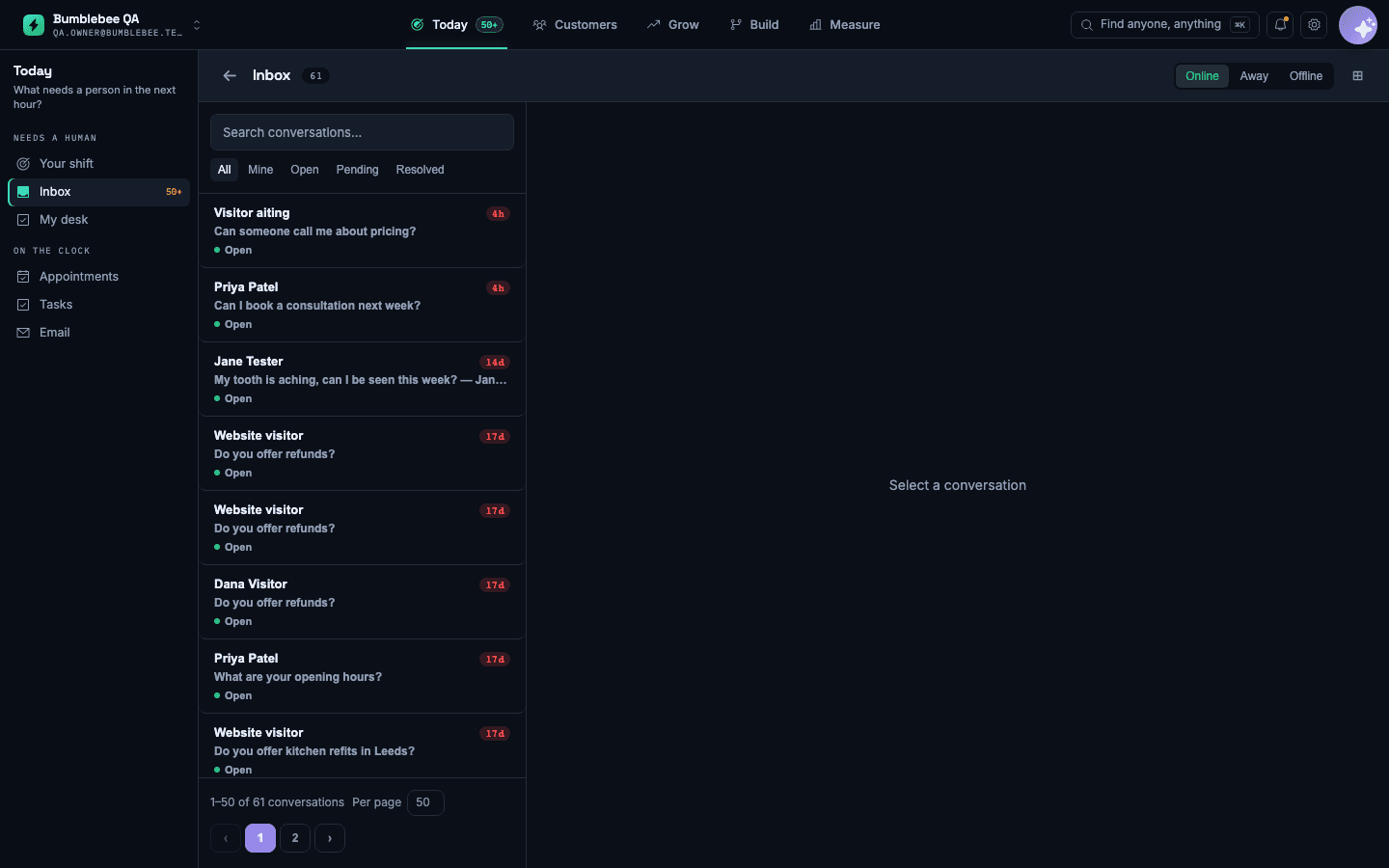
The mistake is treating "response time" as one number. A person who opens a web chat is sitting on your page right now. A person who emails has already accepted that this will take a while. Holding both to the same target produces a service that is too slow for one and needlessly frantic for the other.
Useful working targets:
- Web chat: under a minute. They are on the page. Every minute is a
- chance to close the tab.
- Phone: answered, not returned. A call that goes to voicemail is a call
- you will probably not win, whatever you do next.
- Text message: under fifteen minutes. People treat texts as near-live
- but will tolerate a short wait.
- Email: within a few hours. Same day is fine. Two days is not.
- Social messages: under an hour. Expectations here have drifted much
- closer to texting than to email.
Why the first reply matters more than the best reply
A fast, slightly incomplete answer beats a perfect answer tomorrow, because the enquiry is a race you did not know you had entered. The person is contacting three businesses. Being first means being compared against the others rather than competing on being remembered.
This does not mean the first reply can be useless. "Thanks, we'll be in touch" is not an answer and everybody knows it. The first reply needs to do one of three things: answer the question, offer a time, or ask the one thing you need in order to do either.
Measure the median, and the tail separately
An average response time hides everything interesting. If nine enquiries are answered in two minutes and one takes three days, your average looks fine and you have still lost a customer.
Track the median — your typical experience — and separately track how many breached your target at all. The second number is the one that needs to be zero.
Where the time actually goes
When businesses measure this honestly, delays almost never come from people being slow to type. They come from:
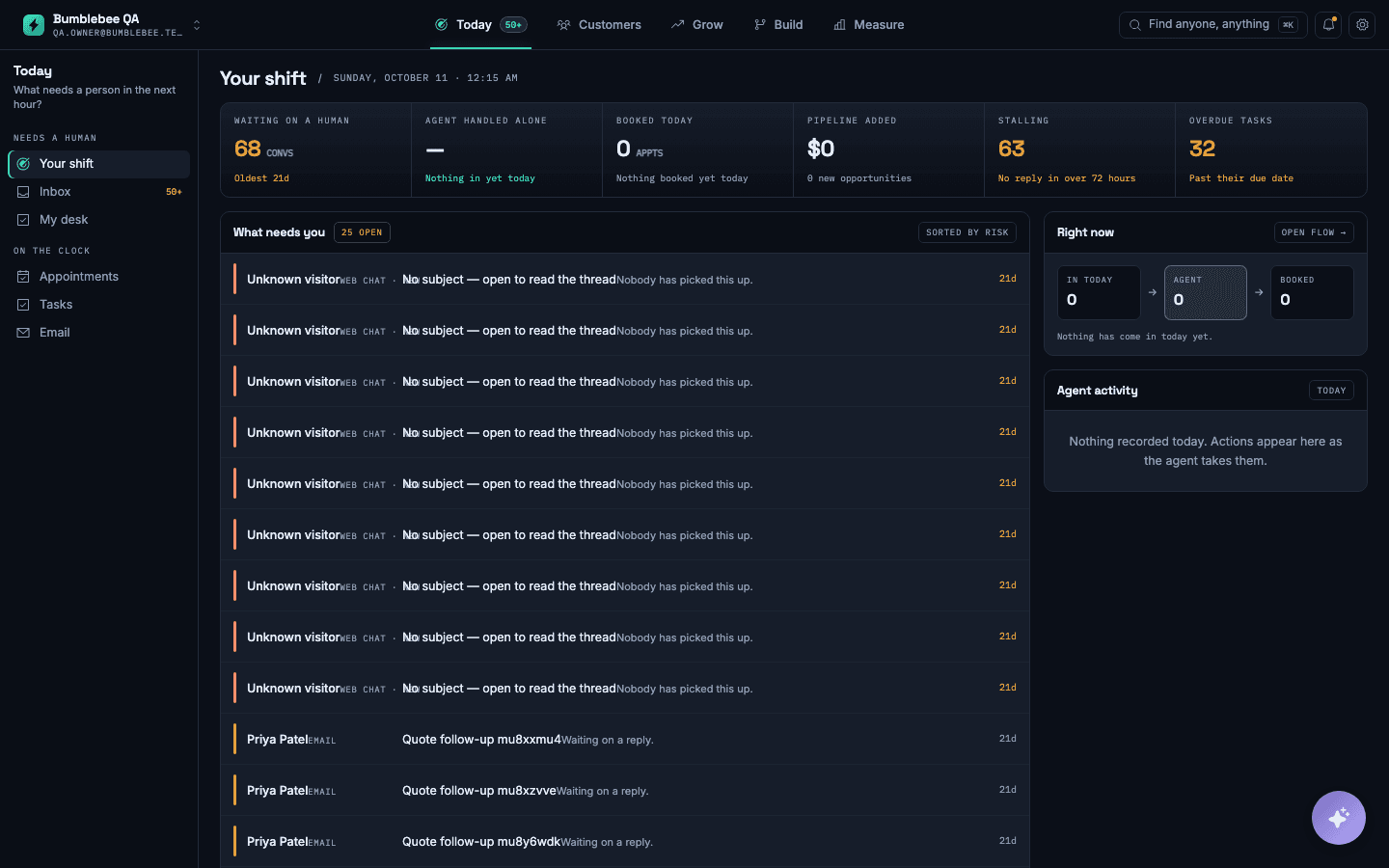
- Nobody owning the enquiry, so everybody assumes somebody else has it.
- The enquiry arriving somewhere nobody is looking — a form going to an inbox
- checked weekly.
- Needing information from a colleague before you can reply at all.
The first two are solved by putting every channel in one queue with clear ownership. The third is solved by writing the answer down once, somewhere the person answering can reach it.