Know exactly why you rank where you do — and fix it
SEO is sold as a monthly report full of numbers that only ever go up. Impressions rose. Position improved. Meanwhile the phone rings the same amount, and nobody can tell you which page earned which booking.
What it does
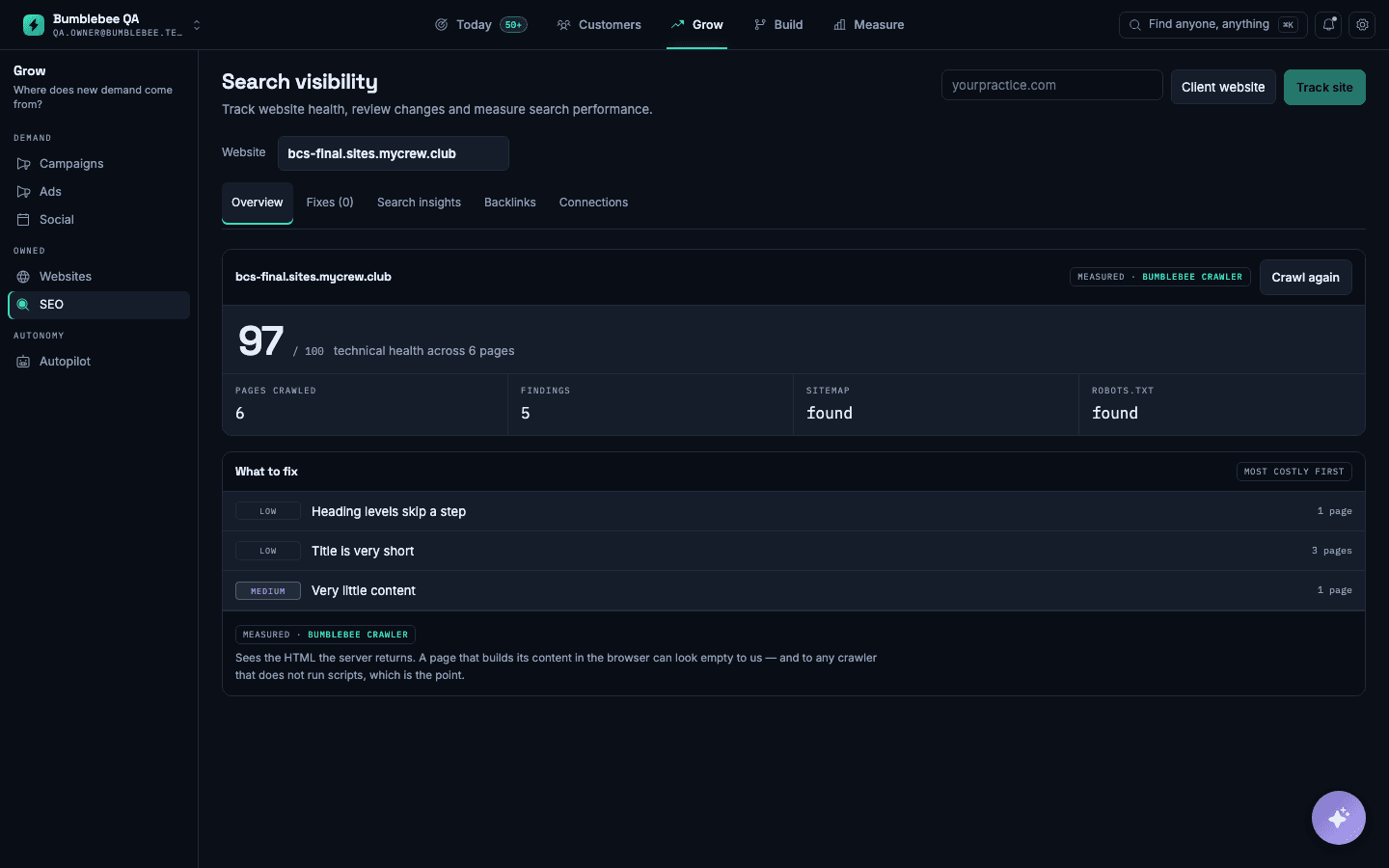
Crawls your site the way a search engine does
Every page, every link, every redirect. Titles that will be cut off, pages nothing links to, content served to two URLs at once, a page quietly blocked from search. Sorted by what it costs you, not by how unusual it is.
See your real rankings, with no guesswork
Your rankings come from Google Search Console, which is Google's own record of how people find you. Anything estimated is labelled as an estimate.
One strong page for each question people ask
Several ways of asking the same thing become one page, so your own pages stop competing with each other. Each group is ranked by what it is worth and how close you already are to ranking.
Fixes what it finds
For sites we host, approve the change and it is applied, with the before kept so you can undo it. For sites we do not, you get the exact tag with your own values in it and where to paste it.
Questions people ask
Do I need Search Console connected?
For rankings, yes — it is the only source that knows what people actually searched to reach you. The crawl, the technical audit and the fixes all work without it.
How is this different from Semrush or Ahrefs?
They tell you what is wrong. Because we host the site and own the inbox, we can make the change and then show you the booking it produced. The report is not the product.
Will it do anything risky to my rankings?
No. Structural fixes are applied automatically; anything that changes what a customer reads waits for you. We will not buy links or use a link farm — that is how sites get penalised.
Works with
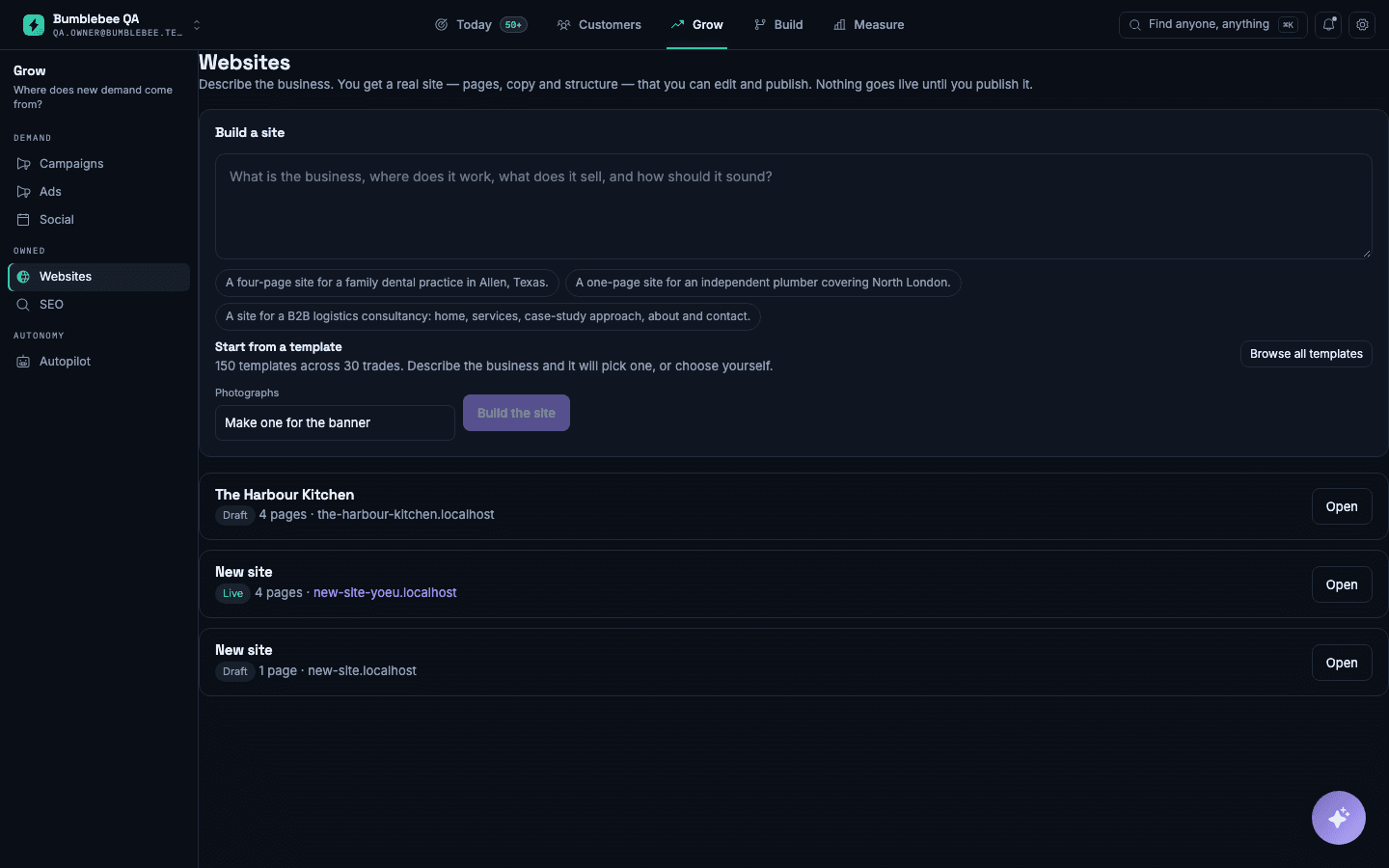
- Website builder — a real website from a sentence about your business
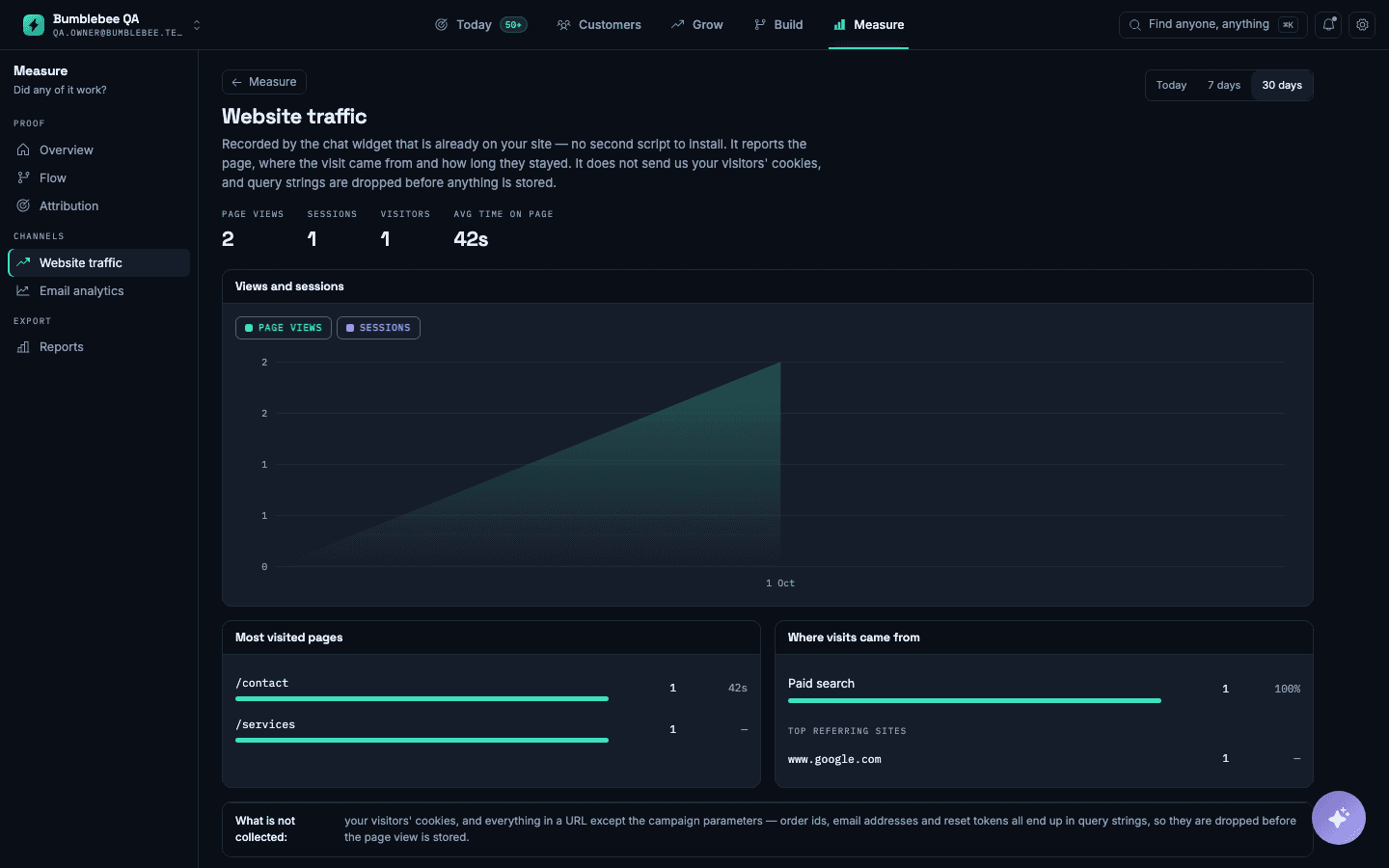
- Website traffic — see who is on your site, where they came from, and what it was worth
- Content engine — pages written to answer the questions people actually search