Attribution without a data team
The one rule
Capture the source when the enquiry arrives, attached to the enquiry itself. Not in a separate analytics tool. Not worked out later.
Almost every failed attribution project fails here. Analytics knows about sessions. Your diary knows about appointments. Nothing connects a session to an appointment, so somebody spends a fortnight building a spreadsheet, then stops, and the business goes back to guessing.
What to capture
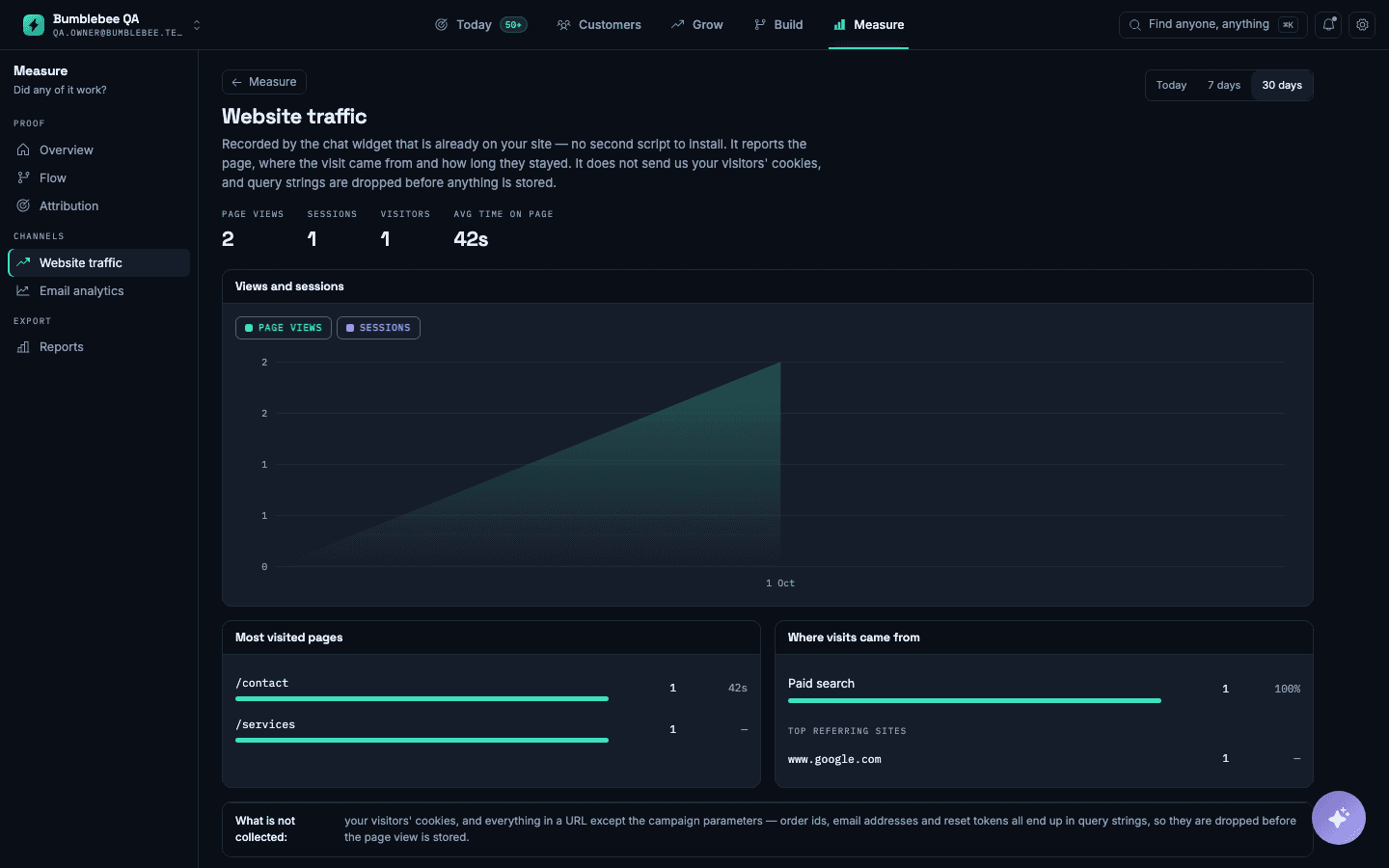
- Where they came from — search, an advert, a referral, direct.
- Which campaign, if there was one. UTM parameters do this.
- Which page they landed on. Tells you what actually earned the click.
- When.
Four fields. If every enquiry carries them, you can answer almost any question you will realistically ask.
Tagging without the mess
Use UTM parameters on every link you control — adverts, email, social, the QR code on the van. Keep the convention boringly consistent: lowercase, no spaces, same source names every time. utm_source=facebook and utm_source=Facebook will become two rows and quietly halve both.
What you cannot tag is word of mouth, which is often the largest channel. That is what the "how did you hear about us" question is for, imperfect as it is.
Reading it honestly
Direct traffic is not really direct. It is mostly people who heard of you somewhere untracked and typed your name. If it grows while you advertise, the advertising is probably working harder than its own numbers suggest.
Branded search is the same trick. Somebody searching your business name had already decided. Counting that as an SEO win flatters the channel.
Small numbers are noise. With eleven bookings a month, a channel going from two to four has not doubled. Wait for enough data to mean something.
The one report worth building
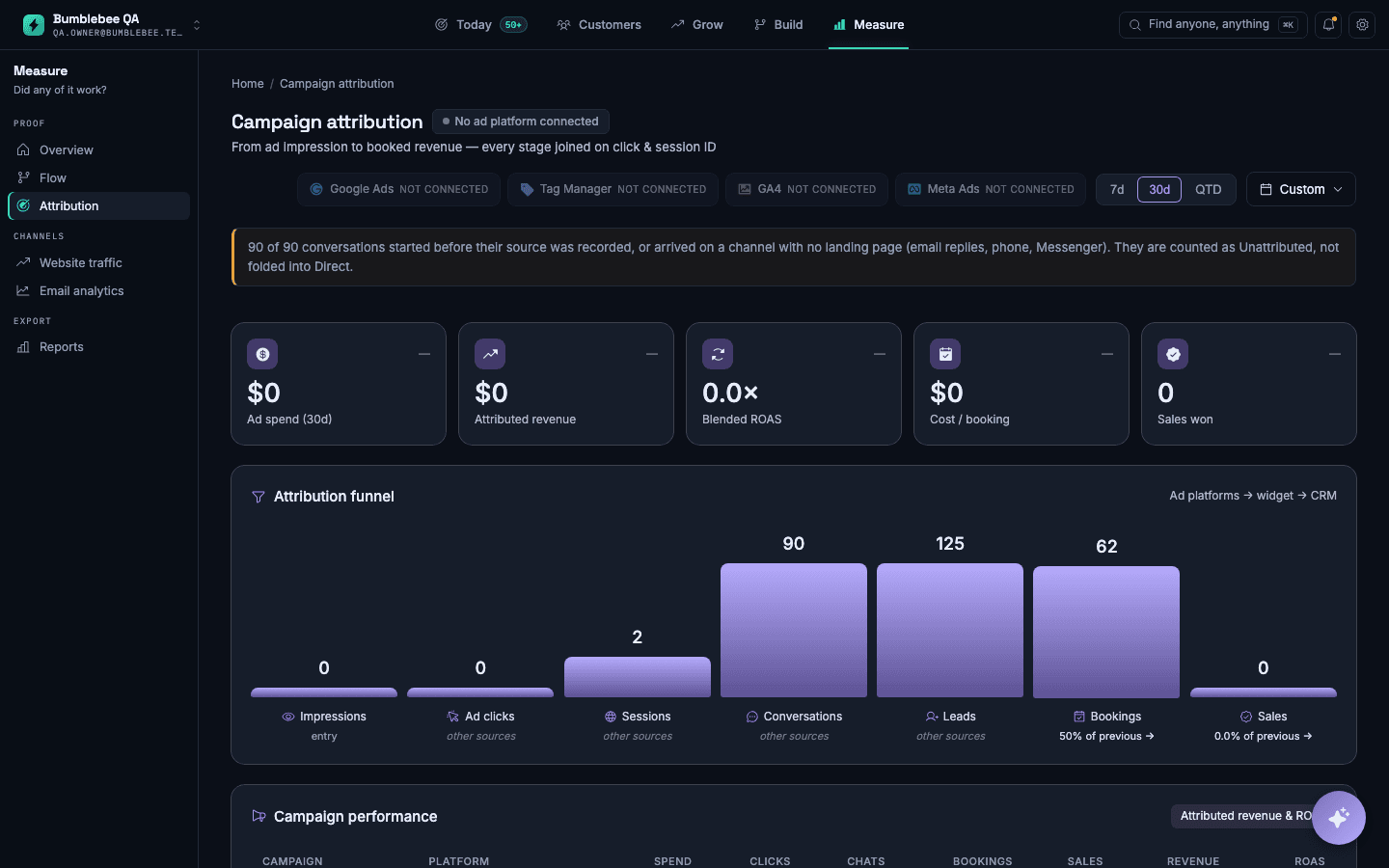
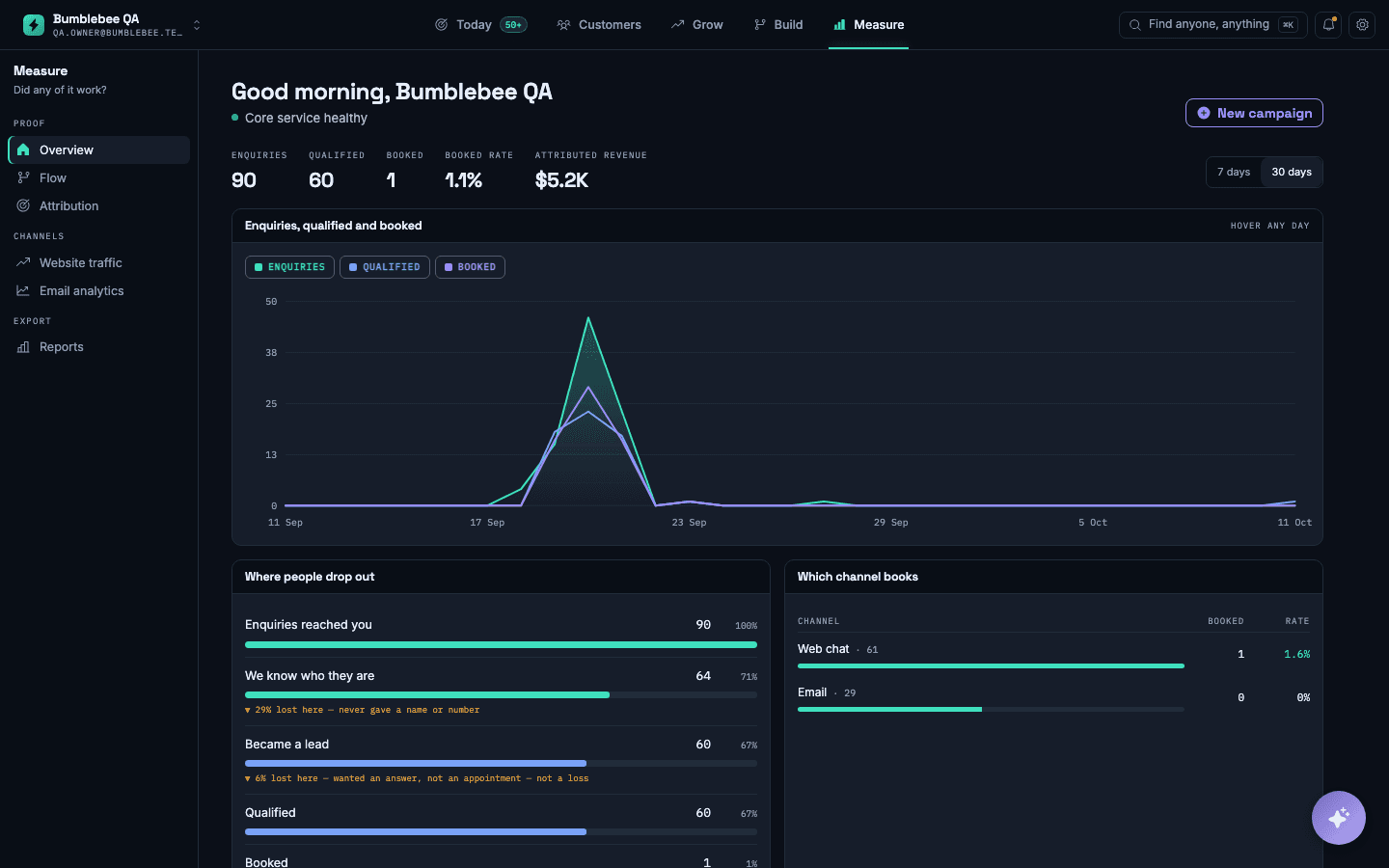
Four columns, one row per channel: spend, enquiries, bookings, cost per booking. That is the whole thing. It fits on half a screen and answers more questions than any dashboard you will be sold.
If a channel has enquiries but no bookings, the problem is not the channel — it is what happens after the enquiry arrives. That distinction is invisible without the third column, and it is the most common misdiagnosis in small business marketing: cutting a campaign that was working because the follow-up was not.
Start before you are ready
The usual mistake is waiting until the tracking is perfect. It never will be. Word of mouth will always be partly invisible, some people will arrive by a route nobody recorded, and small numbers will always be noisy.
Capture the four fields on every enquiry from today. In a month you will have something imperfect and genuinely useful, which beats something perfect you never built.
The decision it enables
The point is not a dashboard. It is one decision: where does the next pound go? When you can see cost per booking by channel, that decision takes about a minute, and it is usually not where you expected.