Five ways an SEO report can be true and still mislead you
The numbers are real. The impression is false.
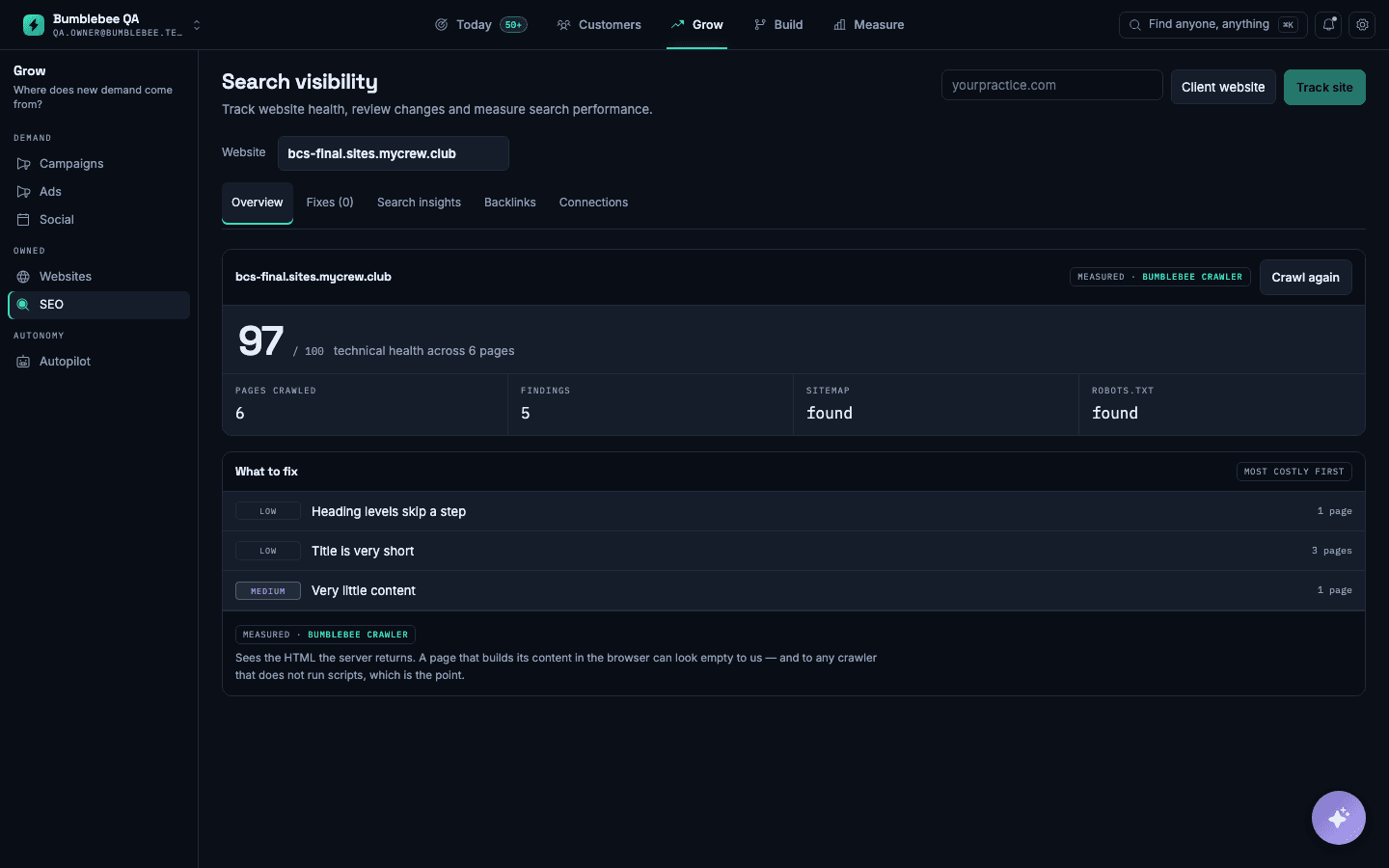
A dishonest SEO report would be easy to catch. The problem is subtler: the numbers are usually true, and chosen because they can only go one way.
1. Impressions
Impressions count how often your site appeared in results, including at position 60 where nobody will ever see it. They rise naturally as Google indexes more of your pages and as search volume fluctuates seasonally. An impression is not a visit, not a customer, and not evidence of anything.
Ask instead: clicks, and clicks to the specific pages we worked on.
2. Average position
The average across every phrase you appear for. Add thirty obscure phrases you rank 8th for and your average "improves" — while your position for the phrase that actually pays you drops from 3 to 7. The average moved the right way for entirely the wrong reason.
Ask instead: position for the ten phrases we agreed matter, listed individually.
3. "Now ranking for 1,400 keywords"
Ranking includes position 90. This number mostly measures how many pages you have, not how well any of them perform.
Ask instead: how many are on page one, and which.
4. Domain authority
A score invented by a tools vendor, not by any search engine. It is useful for comparing two sites to each other and meaningless as a target. It can rise while your traffic falls.
Ask instead: nothing. It is not an outcome.
5. Traffic, without intent
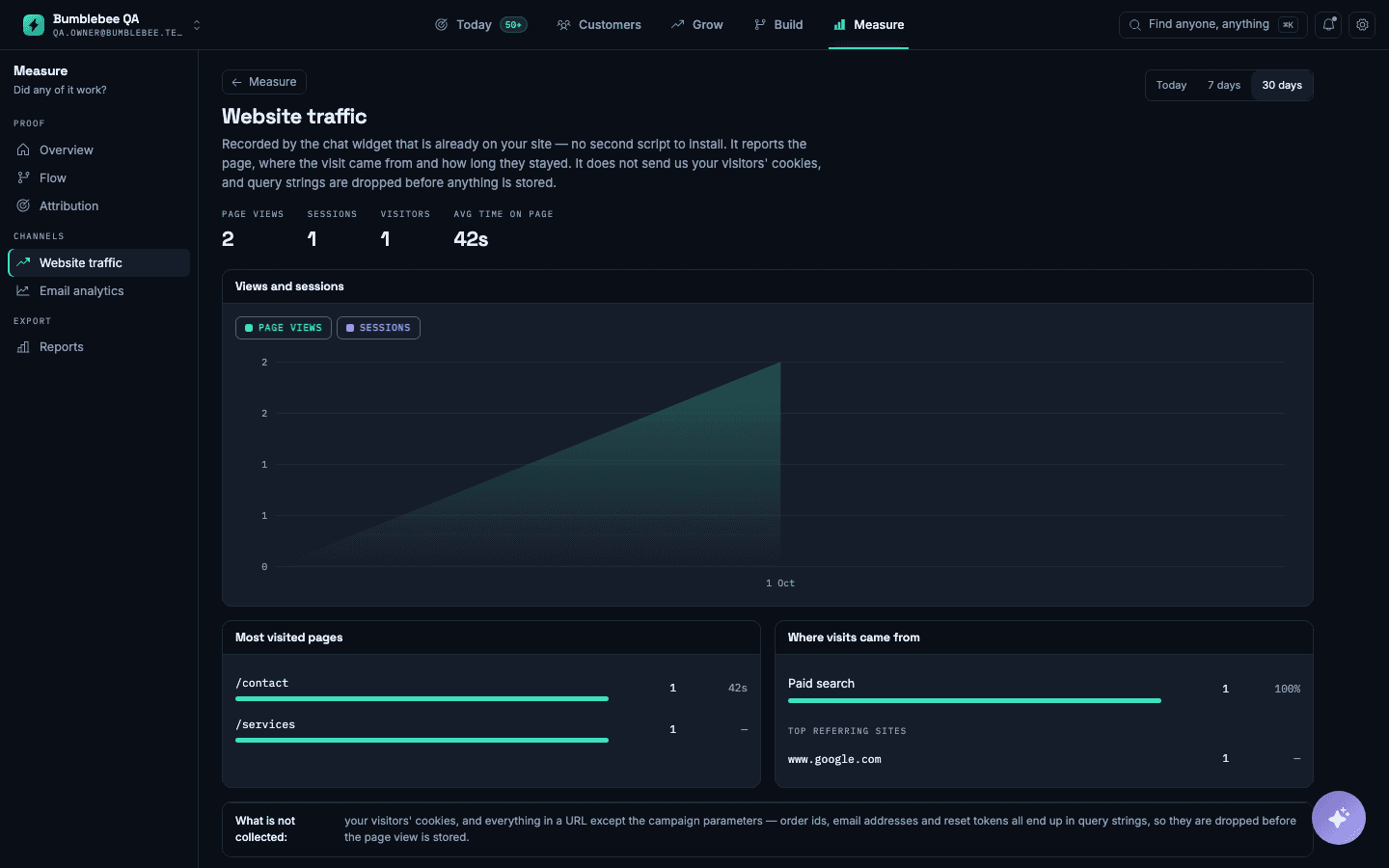
Traffic can rise because a blog post went mildly viral among people who will never buy from you. A hundred extra readers in another country is not progress for a business serving one town.
Ask instead: enquiries, and bookings.
The one question that sorts good from bad
Ask: "Which bookings came from this work, and how do you know?"
A good agency will tell you honestly which they can attribute and which they cannot, and will have set up the tracking to answer it. A bad one will explain that SEO cannot be measured that way — which is not true, and is exactly the answer you would give if you did not want to be measured.
What a good report looks like
It leads with the outcome: enquiries and appointments. It shows the work done and the pages affected. It names what did not work, because a month in which everything worked did not happen. And it is short, because a long report is usually hiding the fact that very little occurred.