Page speed: which numbers matter and which are vanity

Three numbers, in plain words
LCP — how long before the main thing appears. Under 2.5 seconds is good. Past four, most people have gone.
INP — how long the page takes to react when tapped. Under 200ms is good. Past half a second it feels broken and people tap again, which usually makes it worse.
CLS — how much the page jumps about while loading. Under 0.1. This is why people tap the wrong button, and it is the one customers complain about without knowing its name.
Why your score and your customers disagree
Testing tools give you two different things and they are easy to confuse.
Lab data is a single test on a machine in a data centre. Reproducible, and useful for knowing whether a change helped.
Field data is what real visitors actually experienced — on cheaper phones, on mobile data, in places with poor signal.
A site can pass in the lab and fail in the field, and the field is the one that matters. If a tool shows you one number, check which it is.
The fixes worth doing, in order
Images. Almost always the cause. Resize them to the size they display at, serve modern formats, and set width and height so the page does not jump. Usually the single biggest win.
Fonts. Each custom font is a download before text appears. Two weights is plenty. Make sure text shows in a fallback while the real font loads rather than sitting invisible.
Third-party scripts. Chat widgets, analytics, tracking pixels, booking embeds. Each one is somebody else's code deciding how fast your site is. Audit what is actually there; most sites carry at least one nobody remembers adding.
The server. If the first byte takes over a second, nothing else you do matters much. Cheap shared hosting is frequently the real answer.
Do it in the right order
Measure first, on a real page people actually land on — not the homepage, which is often the fastest page on the site and the least representative.
Then change one thing and measure again. Page speed work goes wrong when six changes land together and nobody can say which helped, so the next time something slows down there is no knowledge to draw on.
And re-check after anything is added. The most common cause of a site that was fast last year and is slow now is not decay. It is a sequence of small additions, each individually reasonable, none of them measured.
What not to chase
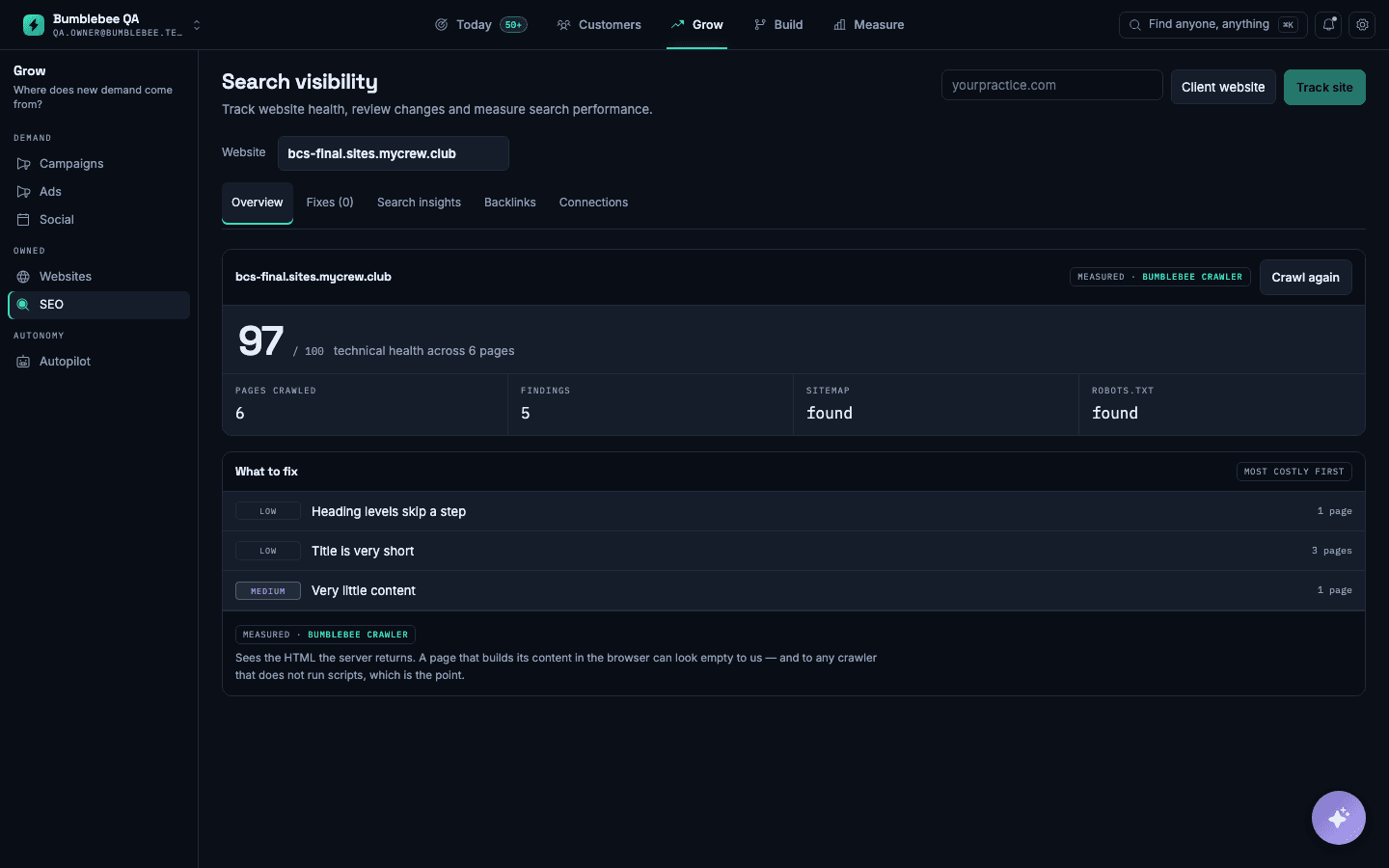
A perfect 100. The last fifteen points cost more than the first eighty-five and are invisible to customers. Get into the green and go back to work.